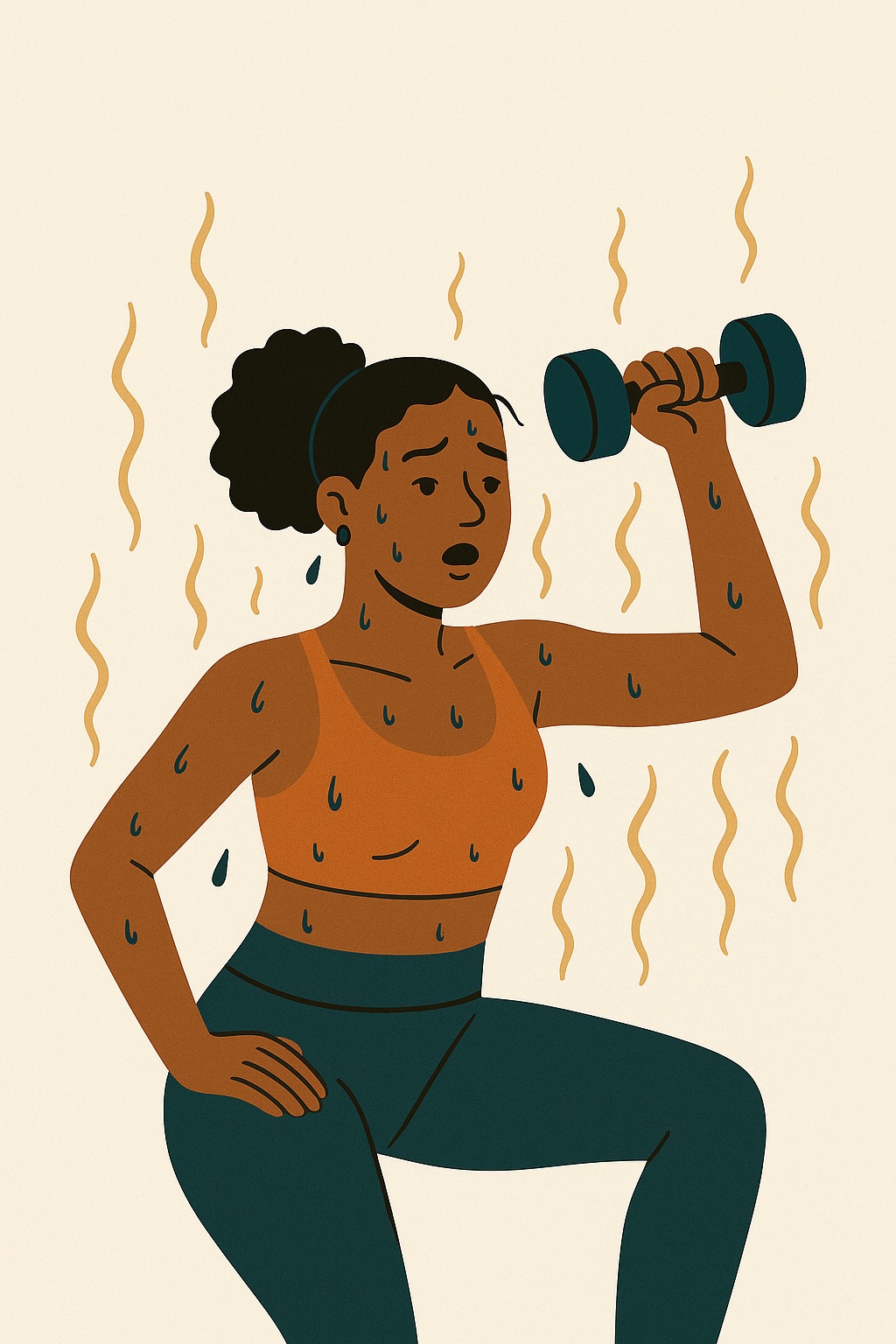
It seems like so many fitness studios are turning up the thermostat. Whether it’s hot vinyasa, hot sculpt, hot pilates, or even HIIT in a sauna-style room, the “heated workout” trend has permeated a handful of modalities. As someone with a background in dance, wellness, yoga, and indoor cycling/spin, I’ve seen firsthand how the heat is used to sell “more burn, more sweat, more transformation.” But here’s the real question: Does the high-heat environment actually make you work harder in a meaningful way, or is it mainly your body just coping with the heat?
The Trend Across Modalities
This isn’t just about one style anymore.
- Originally, “hot” workouts were associated mainly with Bikram-style yoga (think heated rooms at 95–105 degrees Fahrenheit Now you’ll find hot versions of pilates, barre, sculpt, cycling/spin classes, and even HIIT formats.
- The pitch is similar everywhere: “Increase flexibility, burn more calories, detox via sweat, feel the difference.”
- But while the room’s temperature rises, the core movements often remain largely unchanged. The difference usually lies in the environment, not in the exercise itself.
What the Research Tells Us
The Pros
- Warmed-muscle mechanics: Exercising in a heated environment can enhance our range of motion and increase “looseness” in muscles and connective tissue. You often feel much more limber in heated spaces. For modalities like yoga or pilates, this might feel more fluid. For example, one study of yoga in the heat found improved ROM.
- Thermoregulatory adaptation: For professional-level athletes training specifically for hot conditions, protocols exist that improve performance in the heat. These are structured “heat-acclimation” strategies.
- The body does work harder in the heat. Your heart rate goes up, and sweating ramps up. This is a physiological truth.
The Caution
- Calorie burn: While exercising in heat raises cardiovascular strain, the extra calories burned are modest at best. There is not a drastic difference in using rooms at a more normal room temperature range.
- Sweat does not equal fat loss: Heavy sweating may feel like you’re killing it, but a lot of it is water loss, not necessarily increased fat metabolism.
- Movement quality and duration may suffer: If you’re so taxed by heat that you cut your workout short or reduce intensity, or if proper form is compromised, the net benefit of your workout may drop. That isn’t what we want, especially when some of these classes are pricey. We want the benefits not only for our effort but also for our money’s worth too! In other words, the heat might force your body to do more non-exercise work, like cooling and heart rate regulation, instead of the intended muscular/skill work used to complete the workout with good form, like you would in a normal room temperature.
The “Sweat = Results” Sell
As someone who has worked as a boutique fitness instructor for many years, here’s what I noticed:
- Many studios use heat as a marketing tool: “Hot!” = trendy, intense, or next-level. But the underlying movements, sequence, and flow of classes may be nearly identical to the non-heated version.
- Because the environment is more demanding due to thermoregulation and cardiovascular strain, clients often feel like they’re working harder, i.e, higher RPE (rating of perceived exertion) and way more sweat. That feels like more progress, but it’s usually not always the case.
- From a training adaptation perspective, what matters most is mechanical load (muscle tension, strength, volume), movement quality, progression, and recovery, not just room temperature.
- If you take multiple hot classes a week or are normally very active in general, a good question to ask yourself before committing to a hot workout class is, “Based on my current goals, is the heat adding value, or simply adding strain?”
Long-Term Safety & Sustainable Practice
If you know you love heated workouts and want to continue them, here is what I would consider:
- Dehydration/electrolyte loss risk: In heated workouts, you lose more fluid and electrolytes. If hydration isn’t matched, recovery, performance, and safety can suffer.
- Tissue stress risk: Warm muscles feel more malleable, which is great for mobility, but also riskier if you push into extreme ranges without control. I have definitely strained or pulled muscles while rehearsing in a hot dance studio with no AC during the summer. Your body “feels” more flexible, and you can push past your actual range of flexibility and injure yourself. Over time, this could affect joint/ligament health, especially if you regularly take heated yoga, barre, or pilates classes.
- Recovery load: Your body is working harder to cool itself. If you stack heat-based workouts on top of the work your body already does to regulate its temperature, you may compromise recovery or increase injury risk.
- Not appropriate for everyone: People with cardiovascular conditions, autonomic/thermoregulatory disorders, pregnancy, or those who are very young or elderly should be cautious or avoid heated workout sessions.
- Switch-up strategy: If heated classes are your main form of exercise, use heated sessions as one tool in your toolbox and mix them up with other standard-temperature classes for quality movement, skill work, strength training, mobility, and recovery.
My Take
Here’s how I advise you (and your clients if you are an instructor or leader), to think about heated workouts:
- If you love the heat, feel fantastic in it, and have no complications, then enjoy it. Use it as a feel-good or mobility-enhancement tool.
- If your goals are progressive overload, consistent performance, and longevity, don’t assume that temperatures above 90 °F are the best option.
- You don’t need the heat for movement quality. The heat is a flavour, not the main ingredient.
- Encourage hydration, be intentional about warm-ups and cool-downs, and be aware of how the body feels in heat vs. in normal conditions.
- Build your schedule mindfully: maybe one heated class per week, two standard ones if you can, try to rotate modalities (pilates, HIIT, barre, strength, yoga, etc.) to support recovery.
Heat in the studio is compelling. It sells sweat, intensity, “next-level.” Sweat alone is not a guarantee of extra benefit, and for many modalities, you don’t need extreme heat to move well, recover well, see great results, or teach well (for my instructors out there). So when you step into a hot room (or lead one), ask yourself: “Am I here for movement, skill, strength & longevity, or just because the thermostat went up?” Your body and practice will thank you for the clarity.
Sources
- Lambert, B. S. et al. “Acute Physiologic Effects of Performing Yoga in the Heat.” PMC (2020).
- Charlot, K., et al. “Influence of Hot and Cold Environments on the Regulation …” PMC (2017).
- Kelly, M. K., et al. “Heat Adaptation for Females: A Systematic Review and Meta-Analysis.” Sports Medicine (2023).
- O’Leary, Helen. “Does Exercise in Heat Burn More Calories?” Livescience. (2022).
- “Do You Burn More Calories in the Heat? Explained.” FreeRx Blog. (2024).
- Millet, J., Siracusa, J., Tardo-Dino, P-E., et al. “Effects of Acute Heat and Cold Exposures at Rest or during Exercise on Subsequent Energy Intake: A Systematic Review and Meta-Analysis.” Nutrients 13(10): 3424. (2021).
- “Physiological Responses to Exercise in the Heat.” NCBI / NIH – Human Temperature Regulation and Exercise-Heat Stress.
Comments are closed